


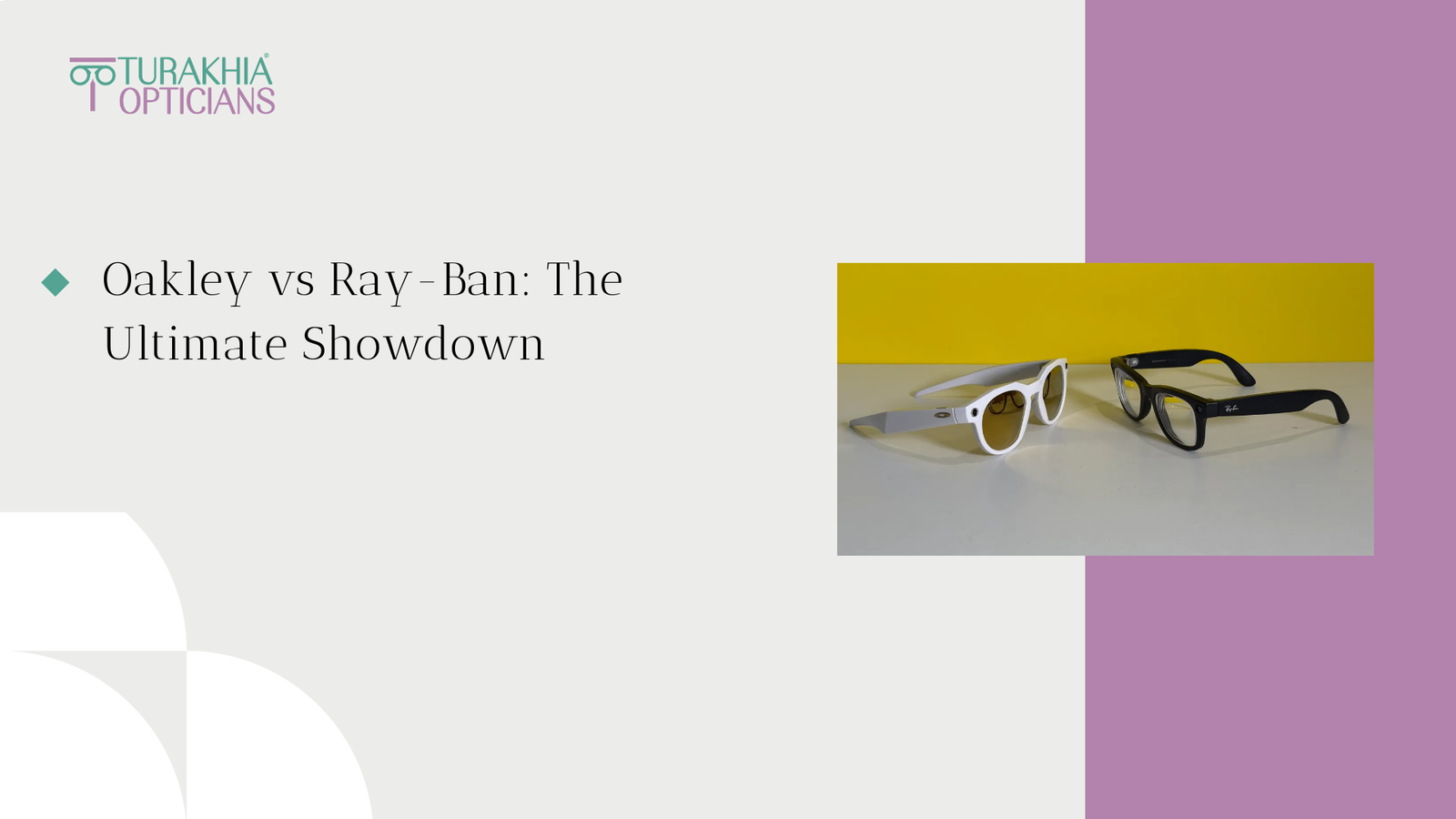
There are very few debates in the world of eyewear that generate as much passion as the Oakley vs Ray-Ban question. Ask ten people who wear sunglasses seriously, and you will receive ten firmly held opinions. The remarkable thing, however, is that both camps are largely correct. These are two of the finest sunglass brands on the planet, each operating at the very top of its respective discipline.
The distinction lies in intent. Oakley was built around the science of athletic performance, producing eyewear that functions as precision equipment for serious sportspeople. Ray-Ban was built around the art of enduring design, producing eyewear that has remained culturally relevant across nine decades and counting. One brand serves the podium; the other serves practically every other occasion in modern life.
The best choice between the two depends entirely on who you are and how you actually spend your time. This guide is designed to make that decision straightforward.
Brand Overviews
Two brands. Two philosophies. One has spent decades chasing athletic perfection in a laboratory; the other has spent the same time quietly becoming part of the cultural furniture. Understanding what each brand actually stands for is the most important step in making the right choice.
Oakley: The Science of Sport
Oakley was founded in 1975 by Jim Jannard with a starting investment of just $300 and an unwavering conviction that eyewear could be engineered rather than merely designed. From the outset, the brand attracted professional athletes who needed equipment, not accessories, and that relationship with elite sport has defined every product decision Oakley has made since.
The brand’s most significant technological contribution to eyewear is its Prizm lens system, which fine-tunes contrast and colour saturation for specific environmental conditions. A Prizm Road lens heightens the detail a cyclist needs on tarmac; a Prizm Snow lens sharpens visibility against white glare on the slopes. The result is not simply clearer vision but more useful visual information delivered precisely when an athlete requires it most.
Ray-Ban: Heritage in Every Frame
Ray-Ban’s origins lie in a 1936 commission from the United States Army Air Corps, which asked Bausch and Lomb to develop a lens capable of reducing the extreme glare experienced by military pilots at altitude. The resulting Aviator frame entered military service in 1937 and reached civilian markets shortly afterwards, establishing a pattern that would define Ray-Ban’s trajectory for the following nine decades.
The Wayfarer arrived in 1956 and proceeded to become arguably the most culturally significant sunglass frame ever produced. James Dean wore them. Bob Dylan wore them. The Blues Brothers wore them. That kind of cultural permanence is not manufactured through marketing; it is earned through genuinely good design that happens to resonate across generations.
Ray-Ban’s G-15 lens, developed by Bausch and Lomb in the late 1950s, transmits approximately 15% of available light whilst rendering colour as the human eye sees it naturally. It remains in production today, essentially unchanged, which says a great deal about how well it was conceived in the first instance. The brand’s Chromance polarised technology builds upon this foundation, adding enhanced contrast and glare reduction for contemporary wearers.
Head-to-Head Comparison
Numbers and specifications only tell part of the story, but they are a necessary part. This section places both brands side by side across the categories that matter most to real buyers, from lens technology and frame construction through to price and everyday versatility.
| Category | Oakley | Ray-Ban |
| Lens Technology | Prizm lenses optimised for specific activities (road, trail, water, snow). XYZ Optics for distortion-free peripheral vision. HDPolarised options available. | G-15 for natural colour rendering. Chromance polarisation for vibrant, high-contrast imagery with glare reduction. |
| Frame Design | Ergonomic, wrap-around sport geometry. O-Matter polymer is lightweight and stress-resistant. Designed to remain stable under physical exertion. | Classic silhouettes built for aesthetic longevity. High-quality acetate and metal alloy construction. Designed for comfort and style across extended casual wear. |
| Durability | Built to withstand impact, perspiration, UV exposure, and extreme environmental conditions. Unobtainium grip components improve hold as you perspire. | Well-constructed for everyday casual and social wear. Acetate frames are robust within their intended context, though not engineered for sport-level physical stress. |
| Style and Versatility | Excels in athletic and outdoor settings. Sport aesthetics do not always translate to formal or business environments. Best suited to activewear and outdoor contexts. | Genuinely versatile across settings. Equally appropriate at the office, a dinner, a road trip, or a festival. Timeless shapes that complement almost any wardrobe. |
| Typical Price Range | £130 to £260 for standard models; higher for premium Prizm and limited editions. | £120 to £220 for standard models; slightly higher for Chromance and limited editions. |
| Best For | Athletes, cyclists, runners, skiers, golfers, and outdoor enthusiasts for whom performance is the primary consideration. | Everyday wear, driving, social occasions, travel, and fashion-conscious buyers seeking a long-term investment in style. |
The Best Sunglasses to Buy Right Now
The following pairs have been selected because each one represents its brand at its most compelling, whether that is a Ray-Ban silhouette that has outlasted every trend or an Oakley engineered for a specific sporting environment.
Ray-Ban
The Classic Pilot: Ray-Ban 0RB3025 112/4L Gold Aviator Sunglasses
The original military Aviator was updated with blue mirror polarised lenses. The wide teardrop of the Ray-Ban 0RB3025 112/4 lens geometry eliminates glare at virtually every angle, making this the definitive choice for driving. The gold frame has aged precisely as well as the design’s near-nine-decade track record would suggest it should.
The Retro Icon: Ray-Ban RB3016 990/58 Clubmaster Sunglasses
The browline silhouette is architecturally distinctive in a way that full-rim frames cannot replicate. The tortoiseshell-and-gold combination paired with G-15 polarised lenses makes this the ideal choice for anyone who wants sunglasses that communicate genuine sophistication without appearing to try too hard. A thoroughly considered pair of Ray-Ban RB3016 990/58 Clubmaster Sunglasses for social and professional wear alike.
The Modern Statement: Ray-Ban RB2191 1292/57 Square Sunglasses
A transparent acetate frame paired with revolutionary polarised brown lenses that cut harsh glare whilst maintaining a light, contemporary aesthetic. This is Ray-Ban at its most current without sacrificing any of the craft that underpins the wider collection. The Ray-Ban RB2191 1292/57 Square Sunglasses works beautifully from late spring through to early autumn.
The Daily Essential: Ray-Ban RB2132 6606/M3 New Wayfarer Sunglasses
The New Wayfarer refines the original: the geometry is marginally softer, the fit more universally flattering across different face shapes, and the advanced polarised lenses deliver the kind of visual clarity that makes every previous pair feel like a compromise. If you are to own only one pair of sunglasses, the argument for this one is difficult to overstate.
Oakley
The Ultimate Sport: Oakley OO9208 F138 Radar EV Path Sunglasses
The Radar EV Path is the benchmark against which serious performance eyewear is measured. Its high-wrap shield design provides maximum peripheral coverage, whilst the extended upper frame geometry opens up the field of vision more than most sport frames manage. Prizm lenses sharpen contrast precisely where it matters during high-speed athletic activity. The Oakley OO9208 F138 Radar EV Path Sunglasses is the pair that professionals reach for.
The Youth Performer: Oakley 0OJ9015 0928 Radar EV XS Path Sunglasses
Professional-grade optical performance scaled to a smaller face geometry. Young athletes receive full access to Prizm lens technology and the structural advantages of the Radar EV platform without any compromise on technical specification relative to the adult version. Rarely does a junior performance product deliver this faithfully on its promise.
The Rising Star: Oakley 0OJ9013 1062 Capacitor Sunglasses
Built specifically for younger, energetic wearers who require durability above all else. The O-Matter frame of the Oakley 0OJ9013 1062 Capacitor Sunglasses handles the physical treatment that would compromise a lesser product, whilst Prizm Violet lenses deliver vivid colour rendering across a broad range of outdoor conditions. An excellent first serious pair of sunglasses for a young athlete.
Which One Should You Choose?
This is the question the entire guide has been building towards. The answer is more personal than most buying guides will admit, because the right pair of sunglasses is the one that fits the life you actually lead rather than an idealised version of it.
Buy Oakley if
you are a cyclist, runner, hiker, skier, or golfer who needs eyewear that stays in place under physical exertion, enhances contrast in specific environmental conditions, and provides maximum UV protection and peripheral coverage throughout demanding activity.
Buy Ray-Ban if
you want luxury men’s sunglasses that work equally well at the weekend, at the office, and at a dinner engagement. If a timeless silhouette that will not look dated within five years matters to you, if you value the feel of premium acetate or metal frame construction, and if natural colour rendering appeals over contrast boosting, Ray-Ban is your answer.
It is also worth noting that the two brands are not mutually exclusive. Many buyers own one pair from each: a Ray-Ban for daily and social life, an Oakley for the track, trail, or slopes. Given that both brands sit within a comparable price bracket, this is a sensible and justifiable strategy for anyone whose life moves between athletic and social contexts with any regularity.
Final Verdict
The Oakley vs Ray-Ban debate will never produce a single, absolute winner, and that is precisely as it should be. Oakley represents the pinnacle of performance eyewear engineering. Ray-Ban represents the pinnacle of enduring eyewear design. Neither is objectively superior. They serve different purposes, and both serve those purposes with genuine excellence.
Your own habits, activities, and aesthetic preferences make this decision considerably simpler than the debate suggests. An honest assessment of how you spend your time will point you toward the right pair far more reliably than any generalised ranking.
Explore the full collection and buy authentic pairs at Turakhia Eyewear. They carry a comprehensive selection of both brands with free shipping available on every order.
Decided on your perfect pair? Browse the full Oakley and Ray-Ban collection at Turakhia Eyewear for the best prices and guaranteed authenticity.


